
Lenny Hagland, part of Islington Boxing Club’s entire 51 year history, wants to take the club to the next level
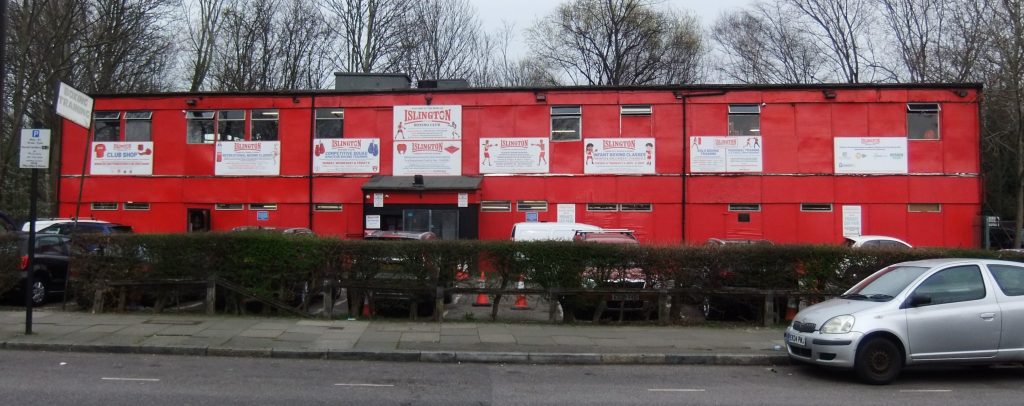
The heavy thud of gloves hitting pads and the creak of old chains suspending punching bags from the ceiling escape the famous red walls of Islington Boxing Club. It is an unusually warm morning in March as the sun beats down along the long stretch of Hornsey Road to the building that stands out amongst its more plain surroundings.
The front door, black with its paint chipping away, is closed. I push the shrill doorbell and, after a short while, the wooden door is opened by a smiling man who directs me through the gym, between an array of rings, to the back office and the heartbeat of London’s biggest boxing club.
Lenny Hagland, the club’s CEO and the man I have come to meet, is equally welcoming as I sit down opposite him in his office, emblazoned with portraits of historic fighters, symbols of his loyalty to Arsenal and paperwork containing fractions of history from the club’s 51 years of existence.
“One of the hardest things about boxing is actually walking into a gym. It takes a lot of guts,” the 60-year-old Hagland explains. He made his first walk into Islington Boxing Club at nine-years-old, when his father – whom he succeeded in 2010 – helped co-found the club.
“It’s changed massively. The way the club has grown, financially and membership-wise, it’s unrecognisable,” Hagland reflects. Since he has been in charge, the club has grown from 200 members to over 3,000 and its work as a charity has been recognised at the British Boxing Awards; nominated for the Grassroots Boxing Hero/Initiative of the Year award.
“We haven’t applied to get this award. It’s been nominated by somebody I don’t even know,” Hagland shrugs. “We don’t get that many plaudits, but we take pride in what we do and get plaudits from the work and success we have within the club. We don’t look for other things, but it is nice if they come.”
Even if Hagland’s humility prevents him from getting swept away with hyperbole, the nomination offers a small nod towards his achievements since taking a brave decision to transform the club.
“When I took over, we had a choice of, do we stick as we are, ticking over three nights a week as an amateur boxing club and have no major ambition? Or, do we build the club and see where we go? It was a choice where we really didn’t know what was ahead of us, and it could have been the wrong choice. We didn’t know,” Hagland says.
The decision to revamp the entire club was difficult at times and, Hagland explains, “I was basically a one man band here in running it. I was self-employed, so I was neglecting my money to come to the club.
“It got to the point that it was ridiculous. My wife was going mad and, in the end, I decided that I worked for the club [full-time]. But for around seven years, I was then working on my own near enough six or seven days a week.”
Eventually, Hagland was able to bring in his son, Reggie, as a full-time employee. “He had been working alongside me on a voluntary basis anyway. He was a postman at the time, and in the end, I said, ‘I can’t do this on my own no more. It’s got too big,’” Hagland says.
However, he explains with a laugh, “I thought that bringing in another member of staff would cut my work down; it didn’t, it actually made it much more because we grew again.”
Then, Hagland added his daughter Millie and Connor [Daly], the smiling man at the door, on a permanent basis. And, as his eyes widen, Hagland says, “it’s just gone bang.
“I’ve now got four people working in the office, five regular one-on-one coaches, sessional coaches, then the volunteer coaches. There are probably about 30 of us.”
Hagland points to Daly’s journey through the club as a reflection of the work he hopes to achieve. “Connor was a former boxer, club captain, and went through coaching courses. We’ve done that with numerous people, and we’re hoping that once they come to the end of their boxing career, they then start coaching for us,” he explains. “They’ve already got the ethos of the club in their heart. They like the club. They like boxing. For some of them, it’s much easier than packing up completely and doing nothing.”
More so than other sports, the all-consuming power of boxing can leave a vast, gaping hole once left behind. A sensation Hagland witnesses so often as the head of one of the country’s biggest clubs.
“They get used to the training aspect of it, the discipline of eating well and everything else, and the community that you have within the club,” he says. “A lot of them are friends within the club and outside socially. They spend a lot of time with each other and that friendship grows. More so with the female fighters, because it’s a smaller group. They look after each other.
“The men are a bit more different because it’s seen as a weakness to show a mental health issue. But, we know it’s not a weakness, it’s a sign for help. The girls come out with it more and you can see it.”
The club runs mental health boxing classes and Hagland has become incredibly conscious of members’ psychology. He points to lockdowns during the Covid-19 pandemic as a clear indicator of just how important the club was to its members.
“A number of our members kept saying, ‘Can you open the gym? Please. I need to, I just need to hit the bag,’” Hagland says. “They really struggled without boxing, struggled without coming to the gym to de-stress, to see their friends. We all struggled in Covid, but I think a lot of boxers struggled a bit more than most. We noticed it more then, and we’re a lot more aware of it now.”
The benefits of boxing reach far beyond the ring too and Hagland knows how important an escape route it can provide to young people. “It brings young people, who are in the problems of the streets, off of the streets,” he says. “Anyone who’s on the periphery of gangs in the local area, if they start boxing it is seen as ok by the elder members of the gang. You can’t do that with many other things.”
Hagland explains passionately his desire to help those on the fringes of gangs find an alternative path. “Boxing pulls people away from that criminality or potential criminality, gangs and knife crime. It is all interlinked. We know that quite a lot of people that have been through this club have come away from that possibility.”
Hagland explains that once a young person joins the club, even if it is just to train once or twice a week, they want to become and stay a member. “All of a sudden, they start becoming more dedicated. It’s three, four times a week. Then they’re running as well on the other nights. The gang members must see that and notice they’re coming away, but they’re allowing that because it is boxing. There are not many sports that would allow that.”
What is it about boxing that offers such hope? “It gives you a sense of purpose. You’ve got somewhere to go to. It is somewhere to get fit. You have camaraderie with teammates. You become part of the boxing family. It’s all part of belonging,” Hagland says sincerely.
However, in order for the club to keep extending its hand to those in need and build its community even wider, it will have to expand beyond its current walls. There remains a fiery determination about Hagland who, like a fighter forever chasing that next bout, wants to take the club to yet another level.
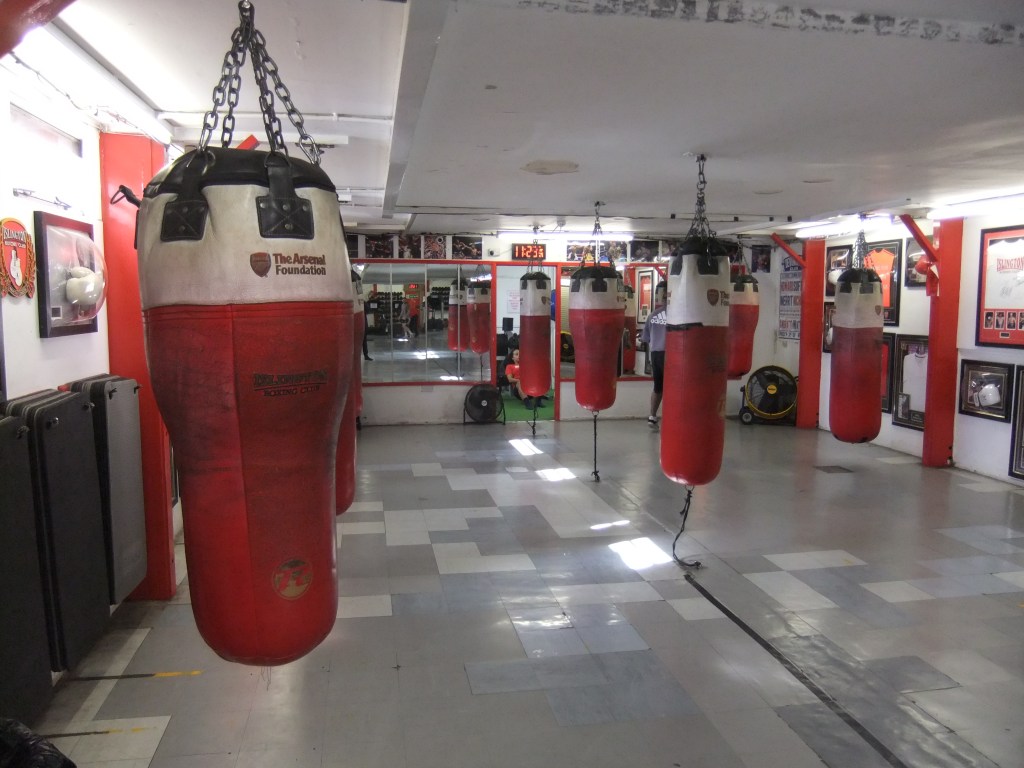
While there is a fondness in the way Hagland speaks of “the beauty of an old time boxing gym today” that lets “all the water run in when it rains and leaks everywhere”, a modern club needs a modern gym.
The club’s New Build Project will, Hagland says, help the club “grow another 200 per cent. At the moment, we’re held back a little bit by the size of our facility. It’s probably one of the biggest gyms in England, but it’s too small for us.
“We’re looking to future proof the club, and just this week, we had a meeting with the planners. It’s still time away, but we’re getting there.”
Hagland will not stop until he has built something to remember. “That would be my legacy,” he says. “My dad left a legacy by leaving a basis for me to carry on. I want to do the same for my son and daughter and whoever is with them.”
After dedicating his life to developing the club, how will Hagland cope when he eventually steps away from boxing and the club?
“I can’t see myself packing up completely, but I could see myself easing it down and letting the younger ones get on with it,” he admits. “They’ve got to, because I ain’t gonna be around forever. My dad wasn’t around forever, no one is. The good thing is, I was taught how to run the club. My son and daughter are being taught how to run the club so that if I go tomorrow, they could take over. Then it’s up to them to steer it in the right direction.”
Walking into a gym for the first time may be the hardest thing in boxing but, for Hagland, walking away from this club, whether in this iconic red gym or in a new facility, may be even harder.
Similar Posts
- ‘You cling to the highs, but the lows really hit you’: The life and hobby of boxing coach and film director Jon Pegg

- ‘My dad left a legacy, I want to do the same’: Lenny Hagland on building Islington Boxing Club, fighters and a community
- ‘I need to process, I need to find the love again’: Joshua Al-chamaa on CrossFit, death and new beginnings

- ‘When I nick a win, I just feel like a bit of a dickhead’: Robbie Chapman’s career as a journeyman boxer

- ‘You need somebody to guide you down the right path’: Isaac Chamberlain and Adam Azim’s fight against knife crime

 Jack McRae writes...