
Jon Pegg (left) has unwavering belief in his fighter Sam Eggington (right). Photograph: Provided by Jon Pegg.
“I like happy endings, even in the most brutal stories,” Jon Pegg says with the authority of a character who has shaped thousands of tales. The boxing coach, film director and writer does not want to bring yet more misery into an already despondent society. “There are too many sad endings in real life.”
It is typical of the jocular, quick-witted Brummie to use his films and stories to search for the light amongst the dark. Pegg’s knack of defusing tension through “taking the piss out of everybody, cracking jokes and telling crazy stories” has been honed by his experience of being thrust so often into the depths of hellish fights.
Pegg knew he was not a special fighter when he turned professional and, after a string of defeats, understood his talents lay outside the ring. “I went around shows offering to do house seconds for nothing. I was just soaking it up,” he explains. “I would go anywhere and do anything. I didn’t really want pay and I didn’t work with a winning fighter for a long time.”
Working on the road with the likes of Baz Carey and Sid Razak brought little pressure and allowed Pegg the chance to understand more about fighters and, more importantly, himself; a decision that prepared him to start taking on and developing more serious prospects, including a “very rough around the edges,” 18-year-old Sam Eggington.
“He had no intention of being a prospect, but I knew what to do with him by then. If I’d been a new, fresh coach, I might have got it wrong and ruined it,” Pegg says of his fighter who, on Sunday (20 April), will climb through the ropes for his 45th professional bout against Lee Cutler. “I’m feeling very, very confident. Sam’s looking the best I’ve seen him in a long, long time. He is hitting personal bests which, after a 13-year-career and at 31, you shouldn’t be doing.”
Although it is easy to highlight concerns in regard to Eggington’s age, and especially the damage he has absorbed over the years, Pegg believes he can emulate Jazza Dickens, Maxi Hughes and Callum Smith by improving yet further as a fighter in his 30s. Pegg adds passionately: “People have always doubted Sam. Everyone told me not to bother because he won’t win a Midlands title. He won the Midlands title and then everybody said he won’t last two years. 13 years in, and they’re still saying he won’t have a long career. He’s already had a fucking long career, you morons.”
Despite being dropped just once in his 44 fights, Eggington’s perennial underdog status is underlined by his presence in the away corner on 17 occasions. It is a role that Pegg believes suits his fighter and one he expects Eggington will relish again.
The coach predicts Eggington will replicate his shock, winning performance against a previously unassailable Joe Pigford when he fights Cutler. “Sam’s upset enough apple carts, he’s had a few upsets himself. He cannot take anything for granted, but I’m feeling very, very confident,” Pegg stresses.
But every great triumph is often surpassed by a deeper sense of despair. “The lows in boxing are a lot lower than the highs. You cling to the highs and you want them, but the lows really hit you,” Pegg admits, before revealing how Eggington’s “completely out of the blue” defeat to Hassan Mwakinyo in 2018 took him to his darkest place.
“I came out of that fight, I went down to the carpark and some clown had blocked my car in. I was in such a mood, I just reversed, moved them with my car and left them in the middle of the road,” he recalls remorsefully, before lighting up. “They put a claim on me, but it went wrong because they didn’t have an MOT or something, but, at the time, I remember thinking, ‘Oh God, I’ve caused myself some trouble.’”
Despite all its desperate lows, boxing is capable of offering the most exultant of emotions. Pegg explains that, “it is amazing how, just as [the sensation of a win is] wearing off, it’ll be shown again on Sky Sports, or somebody will ring you up about it, or you do an interview, and you get the same feeling again. It’s unreal.”
However, more and more people want to taste that addictive rush of dopamine and, Pegg believes, to the sport’s detriment. “So many people get into boxing for ego, they want success straight away and egos are growing because of social media,” he continues. “Now you see boxers turning professional because they want posters to put on their Instagram; people can’t escape from social media. They see how you can get a big audience and then launch another career or be on reality TV.”
Pegg adds that even the majority of fighters who don’t fall into that trap can still be affected by the noise. “Fighters attract real knobheads. Boxers are a rare breed. They’re so brave, raw and honest in what they do, that they expect and believe everyone else is too.
“Boxing is the only place where the mouse roars at the lion, and it’s quite easy to get cynical and dislike boxing if you are around it too much.”
Although Pegg’s experience in the complicated, vicious and all-consuming world of boxing can be exhausting, he finds an escape through filmmaking. “I take every bit of my life experience into my writing, because life’s so much more interesting than what anybody can make up. Real life is the maddest,” he laughs.
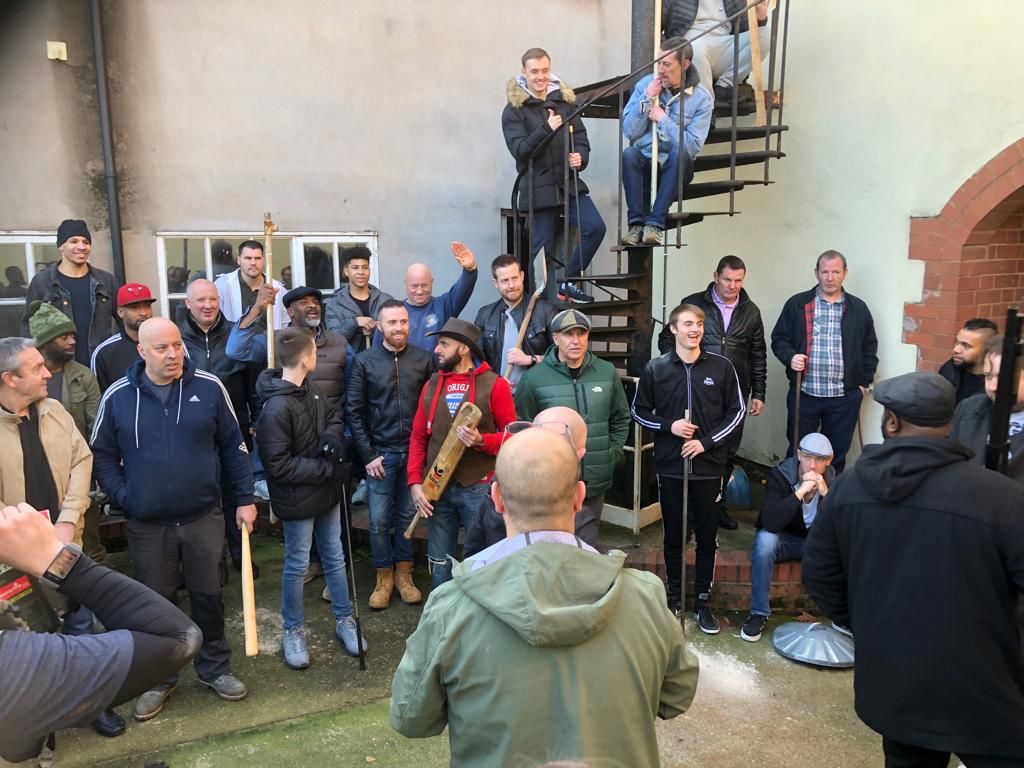
Pegg considers his filmmaking purely as a hobby; but the fact he has won over 30 awards from various independent film festivals suggests this is far more of a serious skill than just a diversion.
“When I finished boxing, I was bored. I did a couple of acting lessons because I just love the buzz of everyone watching you, waiting for you to mess up – a bit like fighting. Then, while I was doing a play, I started writing a script. People were saying, ‘You’re not a filmmaker, you can’t do it.’ So I made my first one in a day,” he grins.
That first film, An Hour’s Sleep, featuring former boxer Richie Woodhall, inspired Pegg to keep working on his new craft and he started entering his films into festivals. He explains: “Boxing people are always competitive. It was nice to win some awards, but then we were talking about a feature film and everyone says you can’t make one without funding.
“To me, that was a challenge. I made a feature film, and about halfway through it, I realised they were fucking right. You can’t, but I’m in it now, so I better get stuck in. That film [The Quiet One] ended up on Amazon Prime.”
Pegg believes that his meticulous and disciplined coaching style has translated into directing. “I’m good at explaining things quickly, because when you’ve got less than 60 seconds to wake a boxer up, get him right, switch him on and motivate him, talking to some actors about pulling a funny face or doing an accent, that’s fucking easy,” he shrugs.
Given his success on the film circuit, could Pegg ever value the acclaim his creations earn over his work in boxing? He dismisses the suggestion because, just as he does in boxing, he takes greater pride in the success of others, rather than himself.

“Winning awards is nice, but it’s just good fun. I’m more proud when my daughter [actress Kia Pegg] won an RTS [Royal Television Society] award or when she is in films or shows. That is what I am proud of. Mine is just a hobby, but it’s a hobby that I like to do to a good standard.”
The fun of filmmaking will never match the pride Pegg can earn through the gritty, gruelling and unrewarding boxing industry, especially when those successes come in the ‘right’ manner.
“My proudest achievement in boxing is Sam Eggington’s career,” Pegg says. “Taking a kid who wasn’t meant to win a Midlands title, to fight the years he has and still be going.
“I couldn’t be more proud. He’s done everything right. He’s never trash talked. He’s never had to resort to stupidness to sell his fights. He does it by being a fighting man, fighting anybody, fighting anywhere, and he’s still doing it to a good level. When he surprises everyone [against Cutler] we’ll be adding another chapter to an already crazy story.”
How will Pegg cope when the fighter he taught and shaped for over 13 years eventually hangs up his gloves?
“I’ve already got it planned out,” Pegg replies honestly. “I’ve already spoken to him about how we’re going to do it. Sam’s done everything and we’ve done everything on our own terms. We took hard fights and we’ve had losses, but we’ve always done what we thought was right. We turned down some serious paydays because we didn’t think it was right.
“He might have a couple of years left, but when he does finish, we’ll do it on our own terms. It’ll be all about him, because that’s what he’ll deserve.”
Pegg needs this story, more than any other, to have its final, happy ending.
Similar Posts
- ‘You cling to the highs, but the lows really hit you’: The life and hobby of boxing coach and film director Jon Pegg

- ‘My dad left a legacy, I want to do the same’: Lenny Hagland on building Islington Boxing Club, fighters and a community
- ‘I need to process, I need to find the love again’: Joshua Al-chamaa on CrossFit, death and new beginnings

- ‘When I nick a win, I just feel like a bit of a dickhead’: Robbie Chapman’s career as a journeyman boxer
- ‘You need somebody to guide you down the right path’: Isaac Chamberlain and Adam Azim’s fight against knife crime

 Jack McRae writes...