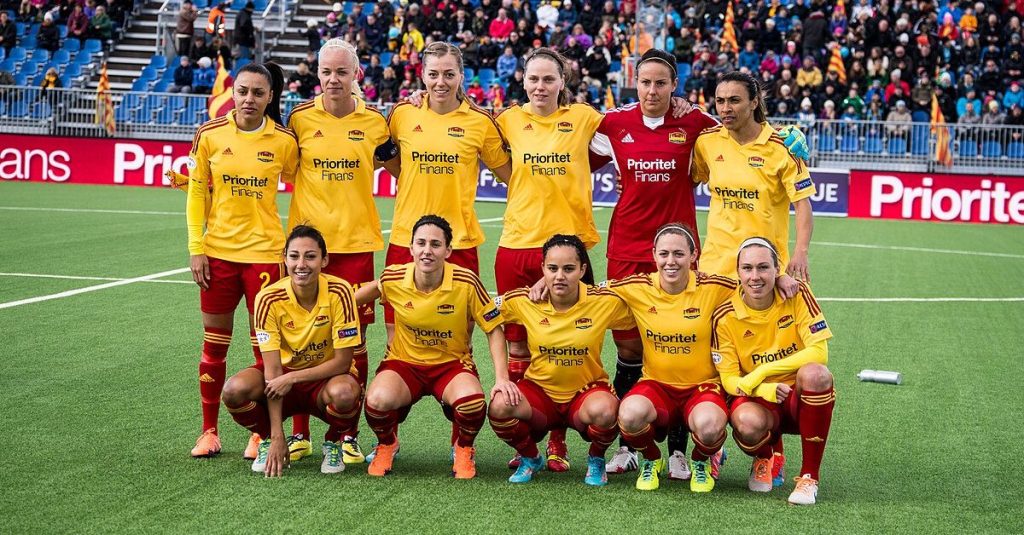
Tyresö FF line up ahead of their Champions League quarter-final against Neulengbach. Photograph: Wikimedia Commons / Herman Caroan
“It’s hard because you wanted to believe in the fairytale,” Josefine Lindberg says. The Tyresö FF defender was 18 when her club from the outskirts of Stockholm tore their way through the UEFA Women’s Champions League and reached the final in 2014. “You didn’t quite understand how big the fairytale was. Looking back at the player list, it is quite unique.”
Under the leadership of sporting director Hans Löfgren, Tyresö was catapulted by waves of new sponsorship from Sweden’s regional divisions in 2005 to top flight football in the Damallsvenskan. Even when Löfgren stepped away from the club in 2011 after being convicted of paying for sex, Tyresö continued to climb and spend – culminating in lifting the Damallsvenskan in 2012 and earning a place in the Champions League.
With a team studded by global stars in Marta, Christen Press and Caroline Seger, the club beat Paris Saint-Germain, Fortuna Hjørring, Neulengbach and Birmingham City to reach the final against VfL Wolfsburg at Estádio do Restelo in Lisbon. On Saturday, Barcelona and Arsenal take to the pitch at José Alvalade Stadium as the final returns to the Portuguese capital for the first time since that game – often billed as ‘the greatest Champions League final ever’.
Tyresö raced into a two-goal lead after just half an hour before Alexandra Popp and Martina Müller levelled the score. Marta added her second to edge the Swedish club ahead again before Verena Faisst and a late Müller winner saw Wolfsburg retain their crown.
It is impossible to imagine Barcelona or Arsenal almost ceasing to exist in a month’s time. The thought of either side competing in their respective third divisions in Spain and England in 11 years is completely unfeasible. Both women’s teams are also supported by their connection to their men’s team counterparts, but Tyresö were not that fortunate. When the German club lifted the Champions League, that bleak fate was sealed for the Swedish club.
Two months before the final, in March 2014, reports emerged that, owing to a lack of sponsorship, the club’s parent joint-stock company Tyresö Fotboll was teetering on the edge of bankruptcy. A debt restructuring plan was established and, a month later, the club announced that players with contracts expiring in June would be released.
The club had spent just four seasons in Damallsvenskan before their brief spell among the elite echelons of women’s football was snuffed out. A mass exodus ensued, the club withdrew from the Damallsvenskan – and were relegated to the fourth tier – and, in June 2014, Tyresö Fotboll went bankrupt.
But the warning signs had long been there.
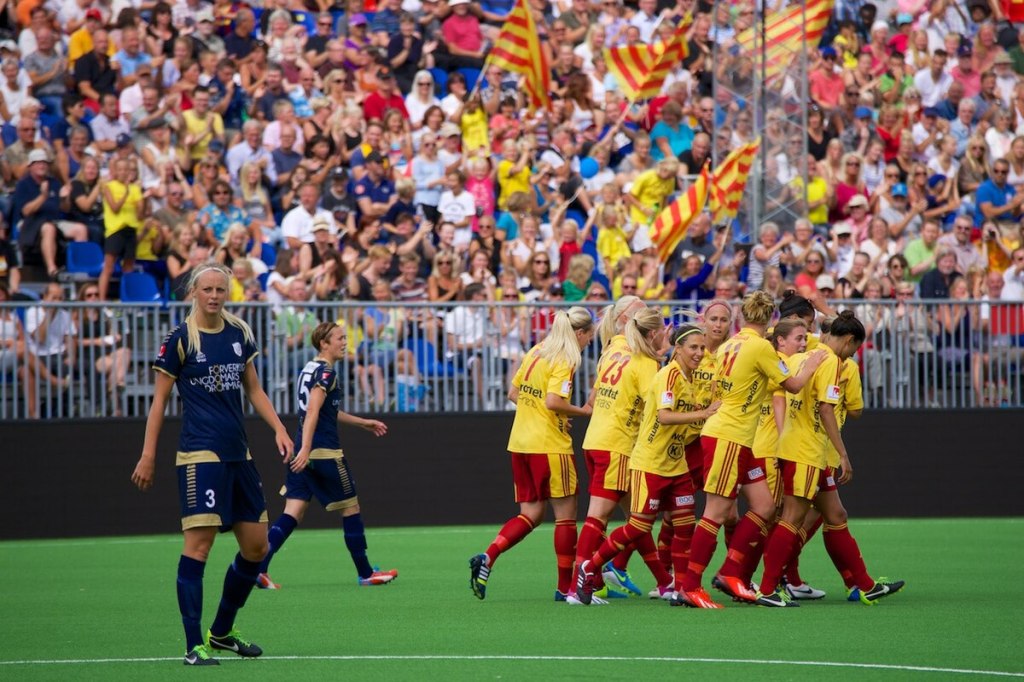
Madelaine Edlund had already played in two Champions League finals with Umeå IK – another Swedish club that had attracted global stars and subsequently battled financially – before joining Tyresö in 2010. The Swedish international scored the winning goal to clinch Tyresö’s first ever Damallsvenskan title in 2012 before going on maternity leave. She returned to a completely different environment and immediately questioned its feasibility.
“When I came back in 2014, I remember there were a lot of new, good players in the team,” Edlund explains. “I was thinking how could the club afford them? I kept that to myself, but I was thinking about that a lot.”
Tyresö had bolstered their already glittering squad with the Brazilian international quartet of Mayara, Thaisa, Rilany and Fabiana, the USA’s Christen Press and Whitney Engen, as well as the Finnish goalkeeper Tinja-Rikka Korpela.
“I was expecting to spend at least two great seasons there with some of the best players in the world,” Korpela says of joining the club in early 2014. “I could never ever have imagined leaving just six months later.”
It took just a couple of months for the illusion of the club’s financial might to be stripped bare. Korpela remembers: “The captain, Caroline Seger, asked in the changing room: ‘Girls, did you receive your salary yesterday? I didn’t.’ Then someone else also said: ‘Yeah, me neither.’ Then the girls laughed [and someone said] something like: ‘Imagine if they don’t have money anymore!’
“None of us could have imagined that this actually was the case. I didn’t check my bank account. I just thought it’s no problem if the wage is a bit late. A couple of days later the club asked us for a meeting to say that they have some problems with some sponsor money, but it will be solved soon, and we should have our wages in one week or so. One week later, they told us that we would need to wait [another] week.”
Edlund was not present at the meeting, but had the news broken to her by a phone call from a team-mate. How did that make her feel? “I felt sorry for the other players,” she replies earnestly. “I had my salary from the government, because I was on maternity leave. I wasn’t dependent on the club’s salary like the other players. I also had a job alongside football.”
Despite the financial turbulence the players united. “As a team, the players got tighter and more determined to play well,” Edlund says. “From my perspective, I was thinking if that [the Champions League final] is going to be the last game, let’s make this time together as good as possible.”
It was a sentiment shared throughout the team. “I remember [the manager] Tony Gustavsson saying in some meetings that the coaches are in the same boat with us, and it’s now us against them [the board],” Korpela explains. “We had the big dream of getting to the Champions League final and that dream kept us working so hard every day, despite the financial madness around the club.”
Korpela adds that, even after weeks of not being paid and with the severity of the situation still unclear, the mood remained jovial. “I remember someone asking Marta to take the ball net back to the changing room. Marta refused and said: ‘No, I will not take the ball net until the club pay our wages!’ And everybody laughed. That was the typical sense of humour of Marta.”
The financial well continued to dry-up, but the Tyresö ‘Galacticos’ were dazzling in the Champions League – the club’s plight the players’ source of inspiration.
“No money was coming in, except prize money from the Champions League. It gave us more motivation so that we could receive at least some wage,” Korpela says. “Also, it gave us some pressure – ‘no win, no money to pay the rent’. It was so surreal.”
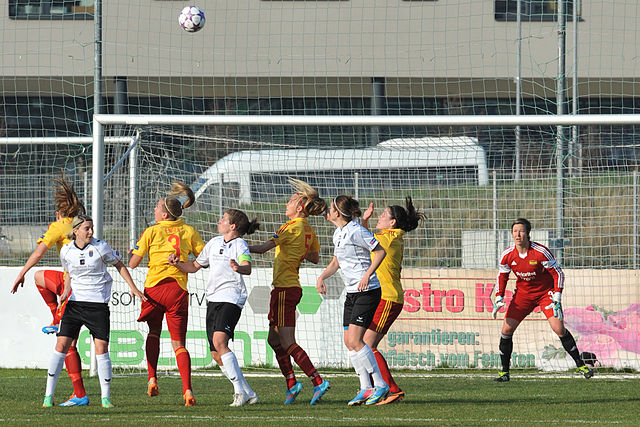
Edlund believes that the Champions League provided the players with some fading embers of hope. “We thought that if we won the final, we could have some sponsors come in and save the club. We hadn’t given up hope. We were playing to win,” she says almost desperately, before adding frankly: “But we didn’t. We lost.”
The mild-mannered Edlund suddenly seems slightly frustrated. “If you are in a final, you should be a good, secure club,” she insists. “The board had good intentions, but they wanted the results too fast. Tyresö only played in the highest league for three years before the final. If they only had more patience.”
Did she feel let down by the board? “Yes, very. They should have known. They should have been in better control of the finances. Don’t buy all these expensive players if they don’t have the money.”
Did she feel any animosity towards the board? “I’m not the kind of person who gets angry, but yeah, I did. They could have managed it much better. I felt so sorry for the players who were depending on them.”
Does Edlund believe the higher-profile, higher-paid players felt any guilt, having been given large salaries? “Maybe they did in their heads, but they shouldn’t. They trusted the club, and if the club were okay with that salary, they couldn’t know the money never existed,” she replies.
Defeat in the final confirmed the inevitable. Tyresö would never be the same club. “You spend so much time with those players every day, and knowing that the team wasn’t going to be together anymore was very sad,” Edlund says. “We didn’t have any real goodbye. We gathered in somebody’s house, I can’t remember whose, but it wasn’t a big thing.”
Korpela already knew where she was heading. “I was going to Bayern Munich and I was obviously over the moon with that,” she explains. “We were told we can leave the club immediately and the club will go bankrupt. I had no idea what that even meant.”
The goalkeeper went on to spend three-and-a-half years with the German giants and later had spells at Tottenham Hotspur and Everton. She is still playing for Servette in Switzerland.
Edlund rejoined her first senior club Sunnanå SK, but it was not without pain. “I was sad to leave Tyresö. I liked that club very much. It was a special time in my life too – living in Stockholm and playing with Tyresö. I even got my first apartment there,” she sighs.
After having her second child in 2015, Edlund retired from professional football – but she was not finished with Tyresö. In 2017, she returned to play for the club for 18 months.
“I was living and working in Stockholm, but I still wanted to play,” she says. “It was weird at first because I missed my old players, but I only came for fun. No money was involved.”
Did she feel like she owed the club after the last sad, abrupt ending? “Yeah, maybe a little bit. I could have gone to another club closer to my home in Stockholm, but I wanted to go there because I wasn’t finished yet,” she says with a smile.
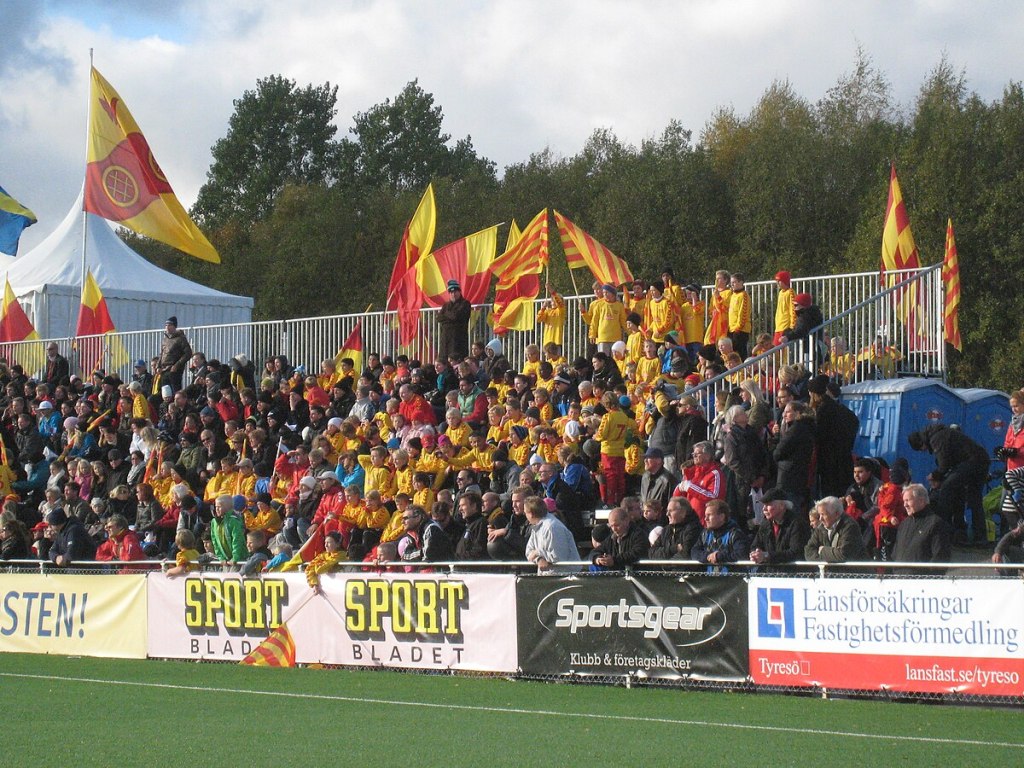
“My former team-mate!” Josefine Lindberg’s face lights up when I mention Edlund’s return to Tyresö. The club, without the financial muscle it once boasted, can no longer sign players of Edlund’s level, let alone the internationals that once donned its yellow shirts and red shorts.
“We have a hard time attracting players. There are a lot of teams in Stockholm, and it is not as easy to get here as the centre,” Lindberg says. “So back then, you wondered why [these players] were here. But only in the aftermath did I really analyse and think: ‘How could the club afford the salaries of 10 or 12 of the world’s best players?’”
The defender has been part of Tyresö her whole career and is set to make her 300th appearance for the club. She was in the youth team when Tyresö possessed some of the most talented players in the world.
“We trained with them sometimes,” Lindberg says. “There was good cooperation between the teams, but it was separate. It was two different realities.”
This division helped protect Lindberg and her young team-mates as the superstar side operated by the bankrupt Tyresö Fotboll was detached from the reserves. “It didn’t affect us as much as [it affected] the name ‘Tyresö’ – we just kept living in that dream,” she says.
Lindberg is keen to keep those two realities apart – the Tyresö that angered and let down so many of football’s most famous players is not the same club that she knows. “I understand their frustration. It wasn’t a good way to build a club for the long-term, but maybe that wasn’t their [the board’s] intention anyway,” she shrugs. “But, in the same way, don’t talk down on Tyresö as a club. I want to protect it, because I have been here so long and there have been so many good things.”
Having witnessed Tyresö in all its iterations, how would Lindberg say it has changed?
“It [used to be] more important to get Tyresö out to Sweden and the rest of the world, than to care about people actually in the club,” she replies. “Now, we have built a culture that is welcoming and where everyone is as important as each other.”
One way the club seeks to achieve this is through initiatives with local charities, from mental health support groups to women’s shelters. As per the club’s most recent community report from December 2023, just under one in five Tyresö residents have a direct or indirect connection to the football club.
Tyresö is no longer the headline-grabbing juggernaut reaching Champions League finals it once was, but nor does it strive to be. When Barcelona and Arsenal kick-off on Saturday evening and the memory of the last Lisbon final slips further away, Tyresö are believing in a new fairytale.
“Why be a club that only bets on having the greatest players? We have gone back to our values and want everyone to have a place at the club,” Lindberg insists. “The most important thing is not the result. We play because we love football. We play because we care about the club.”
Similar Posts
- 20 years after Arsène Wenger’s anniversary, how different are Mikel Arteta’s Arsenal?

- Laura Holden: ‘I don’t want what happened to me to happen to anyone else’

- TWIW: Baller League, where the fun never stops. Even when it should.

- Procrastination to power: Zohran Mamdani offers refreshing political approach to sport

- The first, the old and the new Jack Wilshere

- Second again, again, again… and again?
 Jack McRae writes...