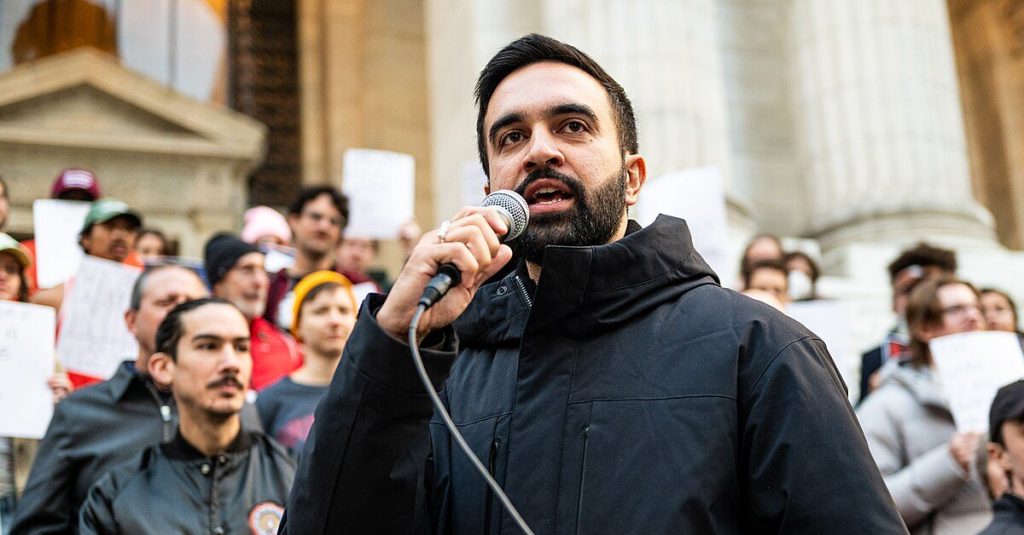
Arsenal fan Zohran Mamdani was elected mayor of New York City. Photograph: Wikimedia Commons / Bingjiefu He
On 19 October 2013, five days after his 22nd birthday, a student at Bowdoin College tweeted a link to a now-deleted YouTube video, adding: “this is why I procrastinate starting my work.” The video had just under 200 views, likely from the student watching and then rewatching the same blurry 13-second clip of Santi Cazorla, Olivier Giroud and Jack Wilshere combining to find the back of the net against Norwich.
The student eventually stopped watching that goal on repeat and would finish his bachelor’s degree in Africana studies. He would then make music, releasing an EP with Ugandan rapper HAB and producing a film soundtrack, before entering local politics.
Now, that student is the mayor-elect of New York City.
It could sound ridiculous, but it shouldn’t. Politicians have lived lives before they entered the public eye and social media is and will become even more of a key archive into the true selves of these public figures. As for Zohran Mamdani, a litany of tweets gives a good indication that he is as passionate a football fan he claims to be.
Whether it’s bemoaning Granit Xhaka being picked, celebrating Robin van Persie’s brace against Dortmund in 2011 or telling the Guardian’s Sid Lowe that he bought a share of Real Oviedo to help save the club from bankruptcy, Mamdani’s love for the game is deep and unquestionable.
Ahead of next summer’s World Cup, held in the United States, Canada and Mexico, Mamdani poses a direct challenge to the game’s ruling authority. In his campaign to become mayor he called out FIFA for their dynamic pricing of tickets, claiming the authority “have opted to take profit time and time again at the expense of the people that love this game.”
For years, FIFA and its president Gianni Infantino’s have cosied up alongside politicians whose own abrasive self-interest makes a mockery of what the sport truly represents.
It is unknown where Infantino keeps his Medal of the Order of Friendship awarded to him by Russian President Vladimir Putin after the 2018 World Cup. He has not announced that he has handed it back to the leader currently embarking on an invasion of FIFA member state Ukraine.
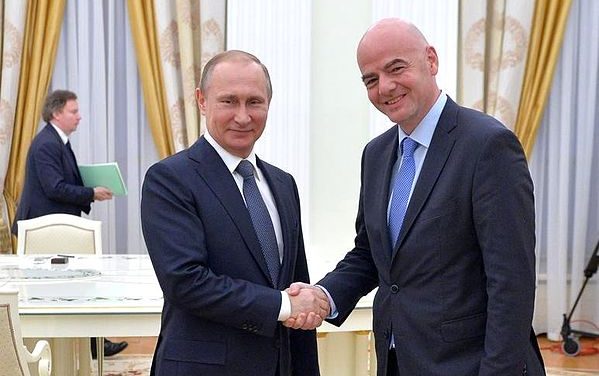
Infantino has also glossed over the thousands of migrant workers who died in Qatar preparing for the 2022 World Cup. Nor has he offered significant criticism or scrutiny of the leaders of future host countries of FIFA’s tournaments.
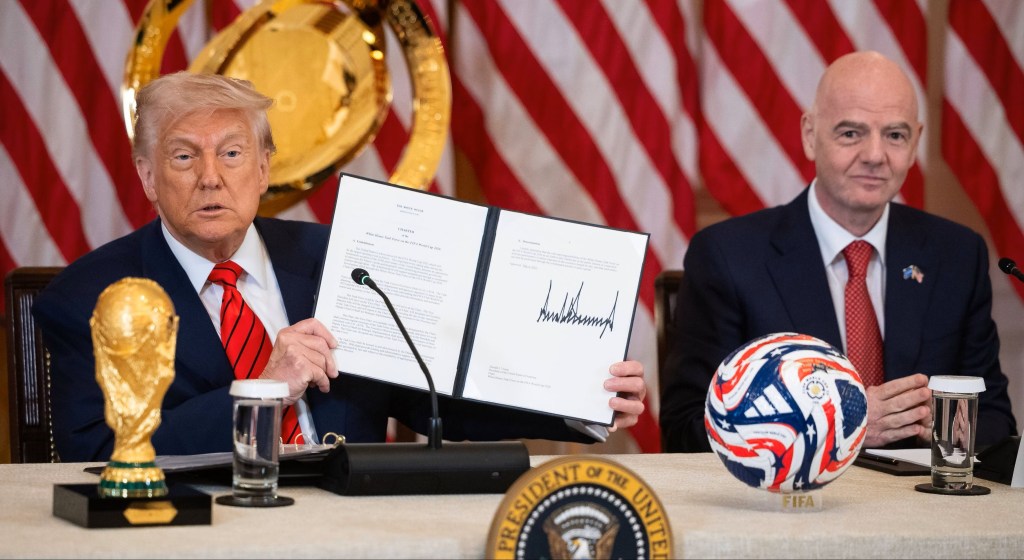
Donald Trump was allowed a place on stage with Chelsea after they won the Club World Cup. The trophy, on which Infantino’s name is engraved twice, had lived in the Oval Office in the weeks leading up to the tournament.
The images of Trump, stood alongside the likes of Cole Palmer and Reece James, were broadcast to the world by DAZN, which had been handed a £1 billion cash injection by SURJ Sports Investment, a subsidiary of the Saudi Arabian Public Investment Fund, chaired by Crown Prince Mohammed bin Salman.
Saudi Arabia was the only bidding nation for the 2034 World Cup, after Infantino set a host of arbitrary hurdles to entry. Both leaders of the United States and Saudi Arabia have overseen crackdowns on human rights and political dissent, but will play host to FIFA’s World Cup with not just Infantino’s blessing, but his unreserved support.
Earlier this week, Infantino announced football’s governing body would be introducing its own Peace Prize, awarded to “individuals who have helped to unite people all over the world in peace.” The motivation, the former legal counsellor claims, is to “recognise the outstanding contribution of those who work hard to end conflicts and bring people together in a spirit of peace.”
This is the latest idea to emerge from the ceaseless Infantino brainstorm of never-ending medals, awards and prizes. Even the slightest of cynics might conclude that the trophy could be heading to Infantino’s “close friend” Trump, who could use the trophy to fill the disappointment in his heart at not winning the Nobel Peace Prize.
Trump does not care for football, or what it should represent. He does care about how it can be used to represent him and Infantino is his greatest cheerleader, declaring: “I think we should all support what he’s doing because I think it’s looking pretty good.”
This is not only an issue at the highest levels either. Members of the UK Parliament scramble over one another to show a superficial interest in football when England progress deep in competitions and the sport is too often hijacked by those interested in how it makes them look, rather than those willing to make it a sport for everyone.
Reform UK launched their own football shirts, despite leader Nigel Farage having little interest in the game and demanding politics remain out of football. In fact, it only takes one advanced search on X to find he only posts about the sport when he can impose his political ideology on the game.
Social media does play an impossibly large role in shaping the sport-and-politics discourse. The unfortunate photos of Keir Starmer playing football undermined his reputation as an Arsenal fanatic, despite being an ardent season ticket holder for years.
There are more important lessons and signifiers of Mamdani’s victory in New York, but his victory does offer a glimmer of hope that this endless cycle of politicians jumping on the bandwagon for their own political gain is growing tiresome.
When Mamdani and other mayoral candidates Andrew Cuomo and Curtis Sliwa were thrown a simple question of whether they would attend a New York Knicks or a Brooklyn Nets game, it seemed impossible to provide the wrong answer.
Yet, Cuomo said he would go half of each game in a feeble attempt to appeal to fans of both sides. An answer which not only was laughed out the room, but hardly gives any indication that the former New York Governor understands sport or its fans.
The new mayor-elect may just be a one-off, a politician who does not pretend to be something he is not when it comes to sport. He is an unashamed Arsenal fan, and under the Arsenal team coached by Unai Emery amid a first Trump presidency, it might have been difficult to remain optimistic.
The Gunners’ fortunes have turned around, and the future of politics can too. Perhaps we will have a new generation of politicians whose love for sport is in how it can be used for positive change, not personal agenda. The students will stop procrastinating and start working.
 Jack McRae writes...