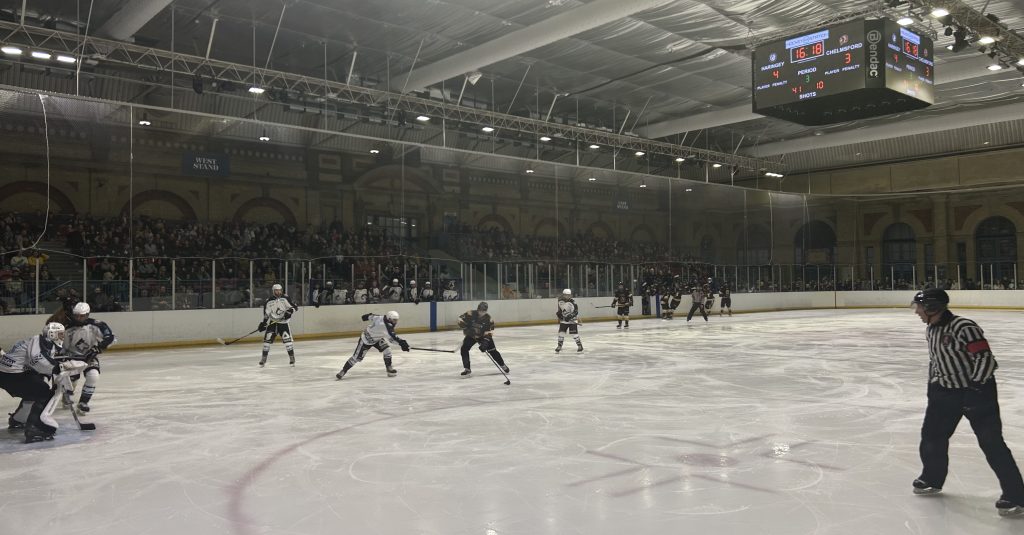
This week I watched ice hockey. The stand that runs alongside the rink at the Alexandra Palace was completely filled and there was little room as hundreds squeezed around the Perspex perimeter separating the onlookers from the flawless sheen of ice.
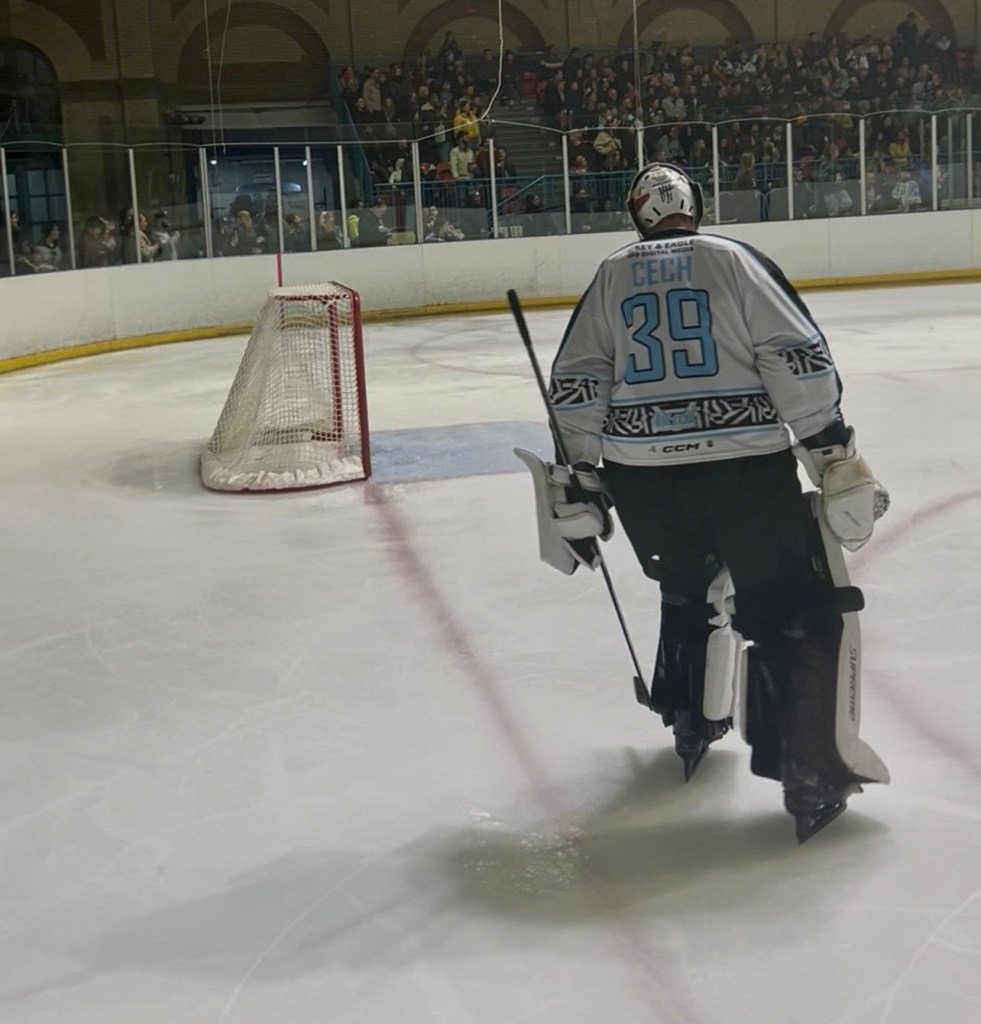
Players from the Haringey Huskies and Chelmsford Warriors returned to the ice, announced one-by-one to a mixture of jeers and cheers from a crowd of split partisanship. On and on the numbers and names ran and ran and ran, until “Number 39, Petr Cech” snapped me back into focus.
I had completely forgotten that the former Chelsea and Arsenal goalkeeper has swapped boots for skates after retiring. Hidden under his white helmet and a huge set of pads, it was difficult to initially confirm whether or not I had heard the Premier League icon’s name correctly as he lined up alongside his team-mates opposite the Warriors.
Cech, and the rest of the players, then took off their helmets to reveal themselves fully but the clarity did not last long. I was sure that the 6’ 5 man on the ice was indeed the man I had watched in net at the Emirates, but my befuddlement returned when asked to rise for the national anthem.
It was difficult to see this as anything other than a cheap imitation of a sport so popular across the Atlantic. A game so steeped in deeply American tropes which felt strangely alien within a British sporting arena.
Maybe because I am not swept up in such nationalistic fervour, I find it easy to be facetious about the tinny instrumental of God Save the King droning tiresomely around the stone building. Yet, the unenthusiastic and intermittent sound of chairs snapping back as the crowd hauled itself up and murmurs of conversation, not proud singing, indicated I was probably not alone in this apathy.
I was soon surprised by different examples of genuine passion. Many spectators wore club beanies or other bits of merchandise that would likely only be purchased by the real, avid Huskies faithful. A drum was used to stoke up the atmosphere and the simple but widely shouted chants bounced off the ceiling,
The cup game began quite evenly, with the away side taking a 2-0 lead early in the opening period before Courtney Grant powered in from distance. The closeness of the game was reiterated to me regularly by the Huskies fanatic sat to my left. “God, this is so tense,” she said repeatedly in a nervous jitter.
After the first 20-minute period ended, with Huskies trailing 3-2, I switched positions to stand on the other side of the rink. The 15-minute stoppages between each of the three periods did not help with the flow of the game, which was already rather stop-start. The ice, torn up a blitz of the blades slicing across the surface, had to be restored to the slick reflective shine it had before the game.
Ice hockey is probably at the peak of its pop culture powers currently owing to the popularity of gay romance television show Heated Rivalry. It is easy to see where the novel and subsequent show draws emotion from the sport in which barges, tussles and fights are commonplace.
The tensions boiled over between the Huskies and the Warriors on a couple of occasions, with minor brawls breaking out in front of a raucous crowd baying for violence. The scraps never really went beyond the odd pushing and shoving, but there were plenty of moments in which the brute power and almost recklessness of the sport added entertainment.
Matthew Tilbrook, with long blonde hair streaking down the back of his Warriors helmet and bouncing wildly behind him, often tore across the ice and careered into opposition found caught in a corner. Such collisions against the glass meant that spectators standing close were forced to jump back, sometimes with a terrified yelp.
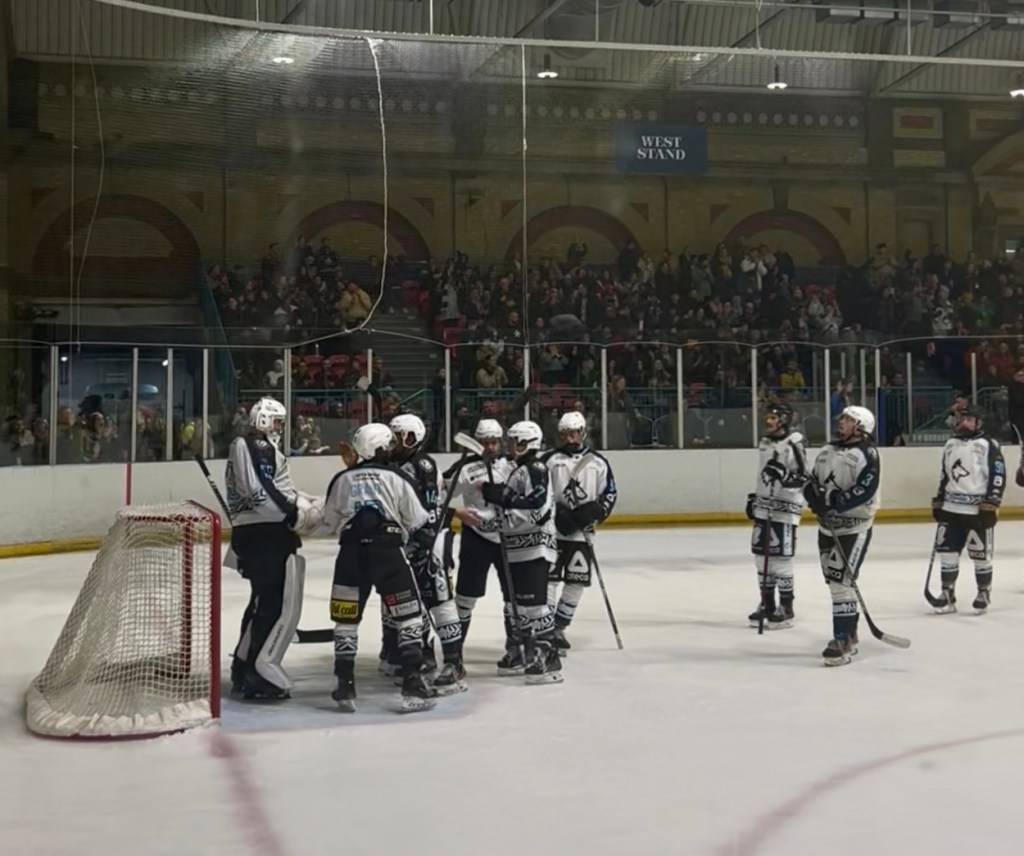
The Huskies came from behind and secured a 6-5 victory. Cech rolled back the years to produce a number of smart, low stops, including a remarkable one-on-one save, to keep the visitors out and he was mobbed by his team after the final buzzer.
The team completed their lap of honour, applauding the fans who had turned out to see them, clenching their fists and slapping the glass. The music pumped and they soaked up the energy.
It was then striking to watch both sets of players emerge later from the rink onto the concourse as they met their families and friends, the majority of them fresh-faced teenagers wearing shorts and sliders on their feet as they carried their heavy bags stuffed with equipment.
It was possible then to recognise the communities of people who just wanted to see their loved ones do well. Even Cech, wearing glasses and towering over his younger team-mates, did not look out of place or as if he, as a multi-millionaire former professional athlete, was above them in any way.
Maybe that is testament to the character of the former footballer, but in many ways, it summed up the true essence of sport. It is not about the flashes of Americanised drivel served up throughout the previous two hours, but about the individual people, their team and who they represent, be it a football club with millions of followers across the globe or an amateur ice hockey team with a few thousand fans in north London.
Similar Posts
- TWIW: Formula One has changed and so has the way we consume it
- TWIW: Hurling transforms Ruislip into Irish hub

- TWIW: Ten years on from Kaepernick, the Superbowl cannot hide Trump’s ugly America
- TWIW: There is more beneath the Americanised surface of ice hockey and Petr Cech is proof
- TWIW: Seats, not pockets, need to be filled first if British basketball is to explode
- TWIW: Van Veen grows from boy to man as darts continues to produce special moments and characters
 Jack McRae writes...